
Jump to a section
Strain names are not standardized effect or cannabinoid promises. This page describes common market stories and observable buying clues—not a guaranteed experience or medical use.
THE USEFUL PART
Keep these in your head.
- Sour Hawaiian Haze is a shared market name, not one globally identical product.
- Use the current label and certificate of analysis instead of relying on folklore.
- Aroma words can help comparison; effect adjectives cannot predict every person.
- Record producer, batch, format, potency, and context when taking notes.
The field-note profile
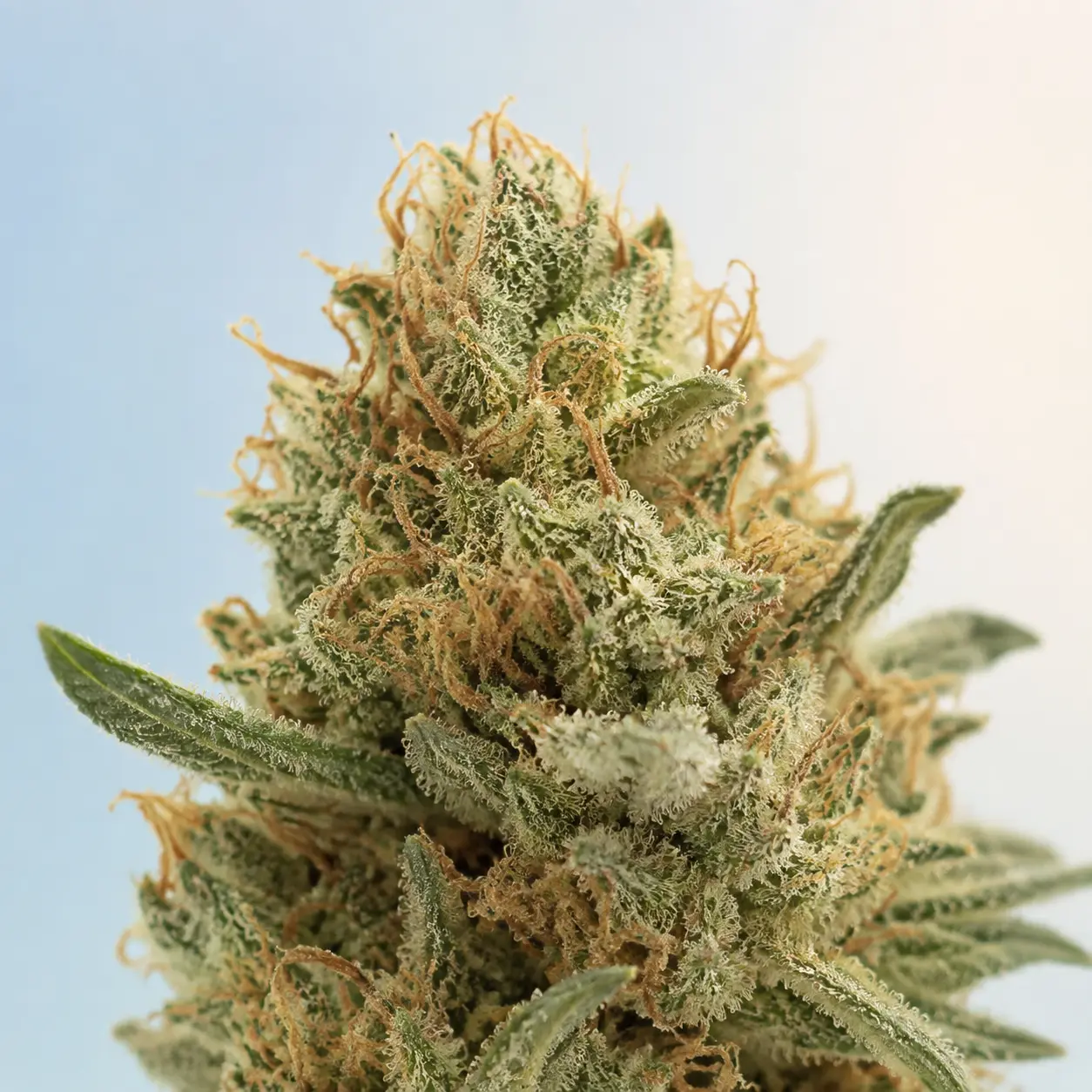 REPRESENTATIVE PHOTOCategory-matched editorial image—not proof of cultivar identity.
- COMMON LINEAGE STORY
- Oregon CBD lists DC Haze “CC” × GG#4 CBD Conversion
- CANNABINOID SHORTHAND
- CBD-rich / hemp
- RETAIL SHORTHAND
- balanced leaning
- AROMA SHORTHAND
- tropical and gassy funk (breeder description)
- HISTORICAL CONTEXT
- A CBD hemp release listed in Oregon CBD's post-2020 sour-cultivar catalog
- PRIMARY / NAMED SOURCE
- Oregon CBD — cultivar catalog
The story attached to the name
Oregon CBD describes Sour Hawaiian Haze as a cross of its DC Haze “CC” selection and a GG#4 CBD conversion, positioning the cultivar around tropical and gassy aroma language.
That lineage and aroma language comes from the named breeder's catalog. It does not authenticate an unrelated retail item, establish a fixed terpene panel, or prove the CBD and total-THC values of the package in front of you.
A strain name is closer to a song title than a laboratory standard: familiar words can introduce very different performances.
Aroma language worth using
Use these as prompts, not an answer key. Smell the product when lawful and practical, compare the aroma with the label panel, and note whether it is clean, vivid, muted, stale, musty, or chemically concerning.
Aroma can change with cultivation, harvest timing, cure, age, package, extraction, and added terpenes. A vape carrying the same name may not smell like the flower.
Effect folklore versus evidence
The breeder catalog discusses agricultural performance and aroma; it does not establish a predictable human effect. Retail descriptions such as “uplifting,” “calm,” or “daytime” are not clinical findings and should not be inherited from the name. Use the current label and CoA, and discuss medication or health questions with a qualified professional.
Format, THC concentration, CBD content, serving size, other substances, food, sleep, prior exposure, setting, and expectations can all matter. “Balanced leaning” is an aisle sign, not permission to drive, work at height, supervise a child, or operate a boat.
What the breeder page actually establishes
The Oregon CBD catalog is useful because it names both parents and supplies the breeder's own positioning. It supports the statement that Oregon CBD lists the cross as DC Haze “CC” × GG#4 CBD Conversion and describes the aromatic direction as tropical with gassy funk. That is the limit of the claim.
The catalog does not prove that every product using this name came from those seeds, that every harvested plant expressed the same chemistry, or that a retailer's flower matches an old catalog description. It also cannot substitute for a finished-batch laboratory report. Breeder documentation answers “what was this line intended to be?” A matching package and CoA answer “what is this item now?”
Do not shorten the name at the counter
Sour Hawaiian Haze is not automatically interchangeable with every product called Hawaiian Haze, Sour Haze, or a seller's house “Hawaiian” flower. Similar words can describe related breeding work, a later cross, or pure marketing. Keep the full printed name, producer, license information, batch, and harvest or package date together.
For comparison, read the separate Hawaiian Haze CBD field note. Two names that share words do not inherit one another's lineage, aroma, cannabinoid result, or reputation.
The five-point CoA match
- Product identity.
The report should identify the same product or material type shown on the package.
- Lot or batch.
The number must match exactly; a generic report for the cultivar is not this batch's evidence.
- Dates.
Check sample, test, harvest, and package dates where supplied. An old report does not validate a new lot.
- Cannabinoid panel.
Read reported CBD, CBDA, delta-9 THC, THCA, and the lab's calculation notes instead of relying on a front-label “CBD” badge.
- Lab and report integrity.
Confirm the testing laboratory, report identifier, page count, and any regulator-hosted or lab-hosted verification link.
Hemp rules and cannabis-market testing requirements differ by jurisdiction and can change. Use the applicable regulator's current source rather than treating an old percentage or “compliant” claim as portable.
How to evaluate a Sour Hawaiian Haze product
- Verify the licensed producer and seller.
Names are easiest to copy in unregulated markets.
- Identify the exact format.
Plain flower, infused pre-roll, vape, concentrate, and edible are not interchangeable.
- Read the batch potency.
Do not inherit an old expectation from another producer.
- Check package and test dates.
Freshness can matter more than a famous name.
- Compare aroma and ingredients.
Added terpenes or flavor ingredients change the product.
- Keep one-line notes.
Producer + batch + format + setting is more useful than a five-star strain rating.
The caution specific to this reputation
Do not let the name lower your guard
A hemp or CBD label is not a laboratory result. Confirm the exact product's certificate of analysis, total THC under the law that applies, seller authorization, ingredients, and batch identity. CBD can also interact with medicines and is not risk-free.
No strain name cancels general safeguards: adults 21+, no impaired driving, no mixing with alcohol by default, careful storage, and professional health advice when medicines or health conditions may be relevant.
A better note template
Big Bud Man standard: know the source, read the batch, protect kids and pets, and never drive impaired.